

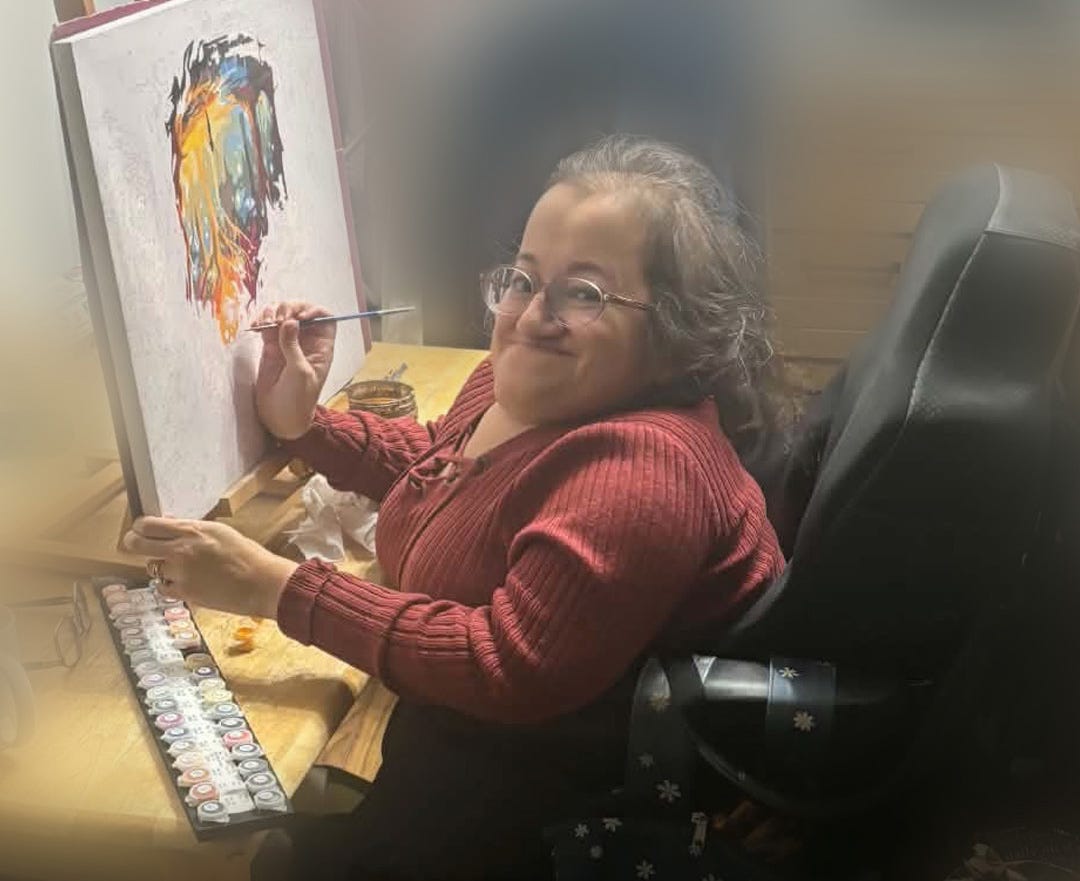
So much about being an artist comes down to seeing—a fact I was vividly reminded of recently when I once again had to upgrade my progressive glasses to an even stronger prescription and got a whole other pair of glasses just for painting.
Still, as helpful as it is to have sharper vision when I’m working, I know that another key element is the willingness to see what is actually in front of our eyes.
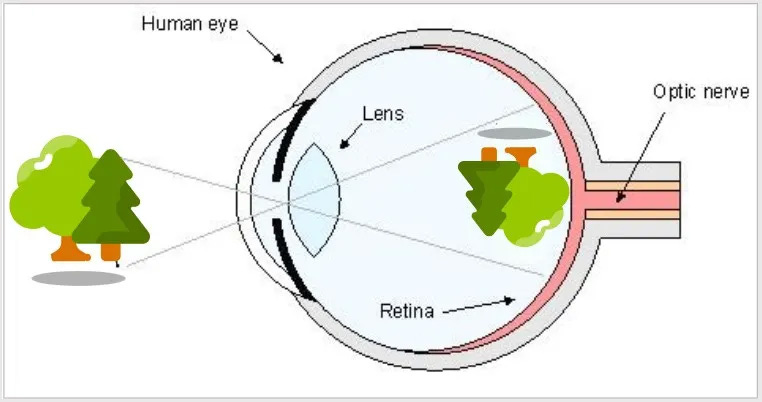
In a very real way, what we see is always an interpretation of what our brain processes. For instance, because of the way the lens in our eyes works, the image hits the retina wall upside down, but our brains flip it over for us.
The brain also has other tricks, like helping us ignore a slew of visual data in favour of the most important bit of information. Like, if you were trying to escape a burning building, you’d want to be scanning for signs of an exit as opposed to getting distracted by the pretty framed landscape painting on the wall.
All these eye-to-brain tricks have benefits, but they also create a kind of shorthand interpretation that can gloss over the details of what’s really there.
I believe this is why so much early art instruction boils down to teaching folks to really focus on the act of perception as opposed to leaning on the shorthand coming from our brains.
Blind Contour Drawing
If you’ve taken a drawing class at any level from high school on upward, there’s a good chance you’ve encountered some version of the Blind Contour Drawing exercise. I’m aware that there are many ways to do this exercise, but I’m going to guide you through the version that I learned back in the day.
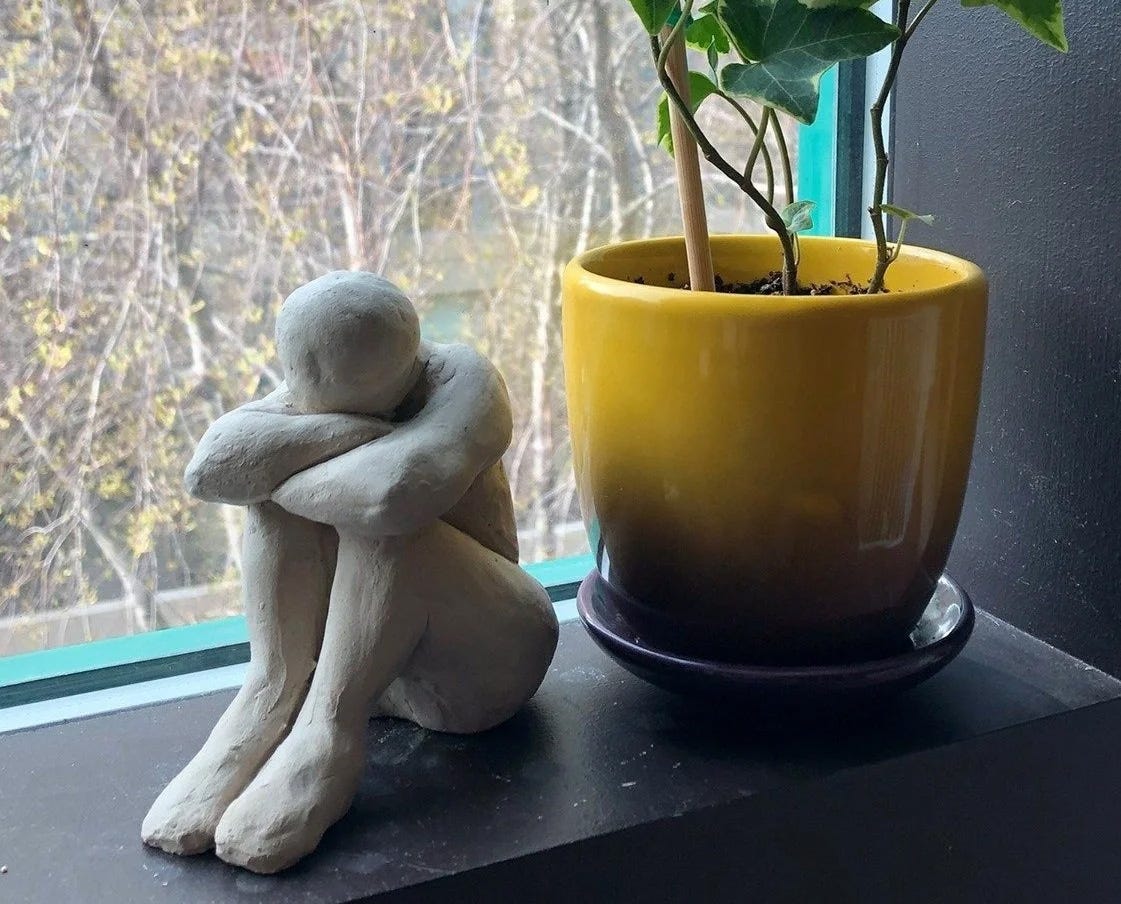
Step 1: Choose an object that has an interesting shape to it. I recommend something not too complicated to start with, but also has some interesting nooks and crannies.
Step 2: Get a regular sheet of paper and the drawing tool of your choice. The best drawing tools for this exercise are ones that have a level of smooth flow to them, like a pencil or marker.
Step 3: Set a timer for two minutes.
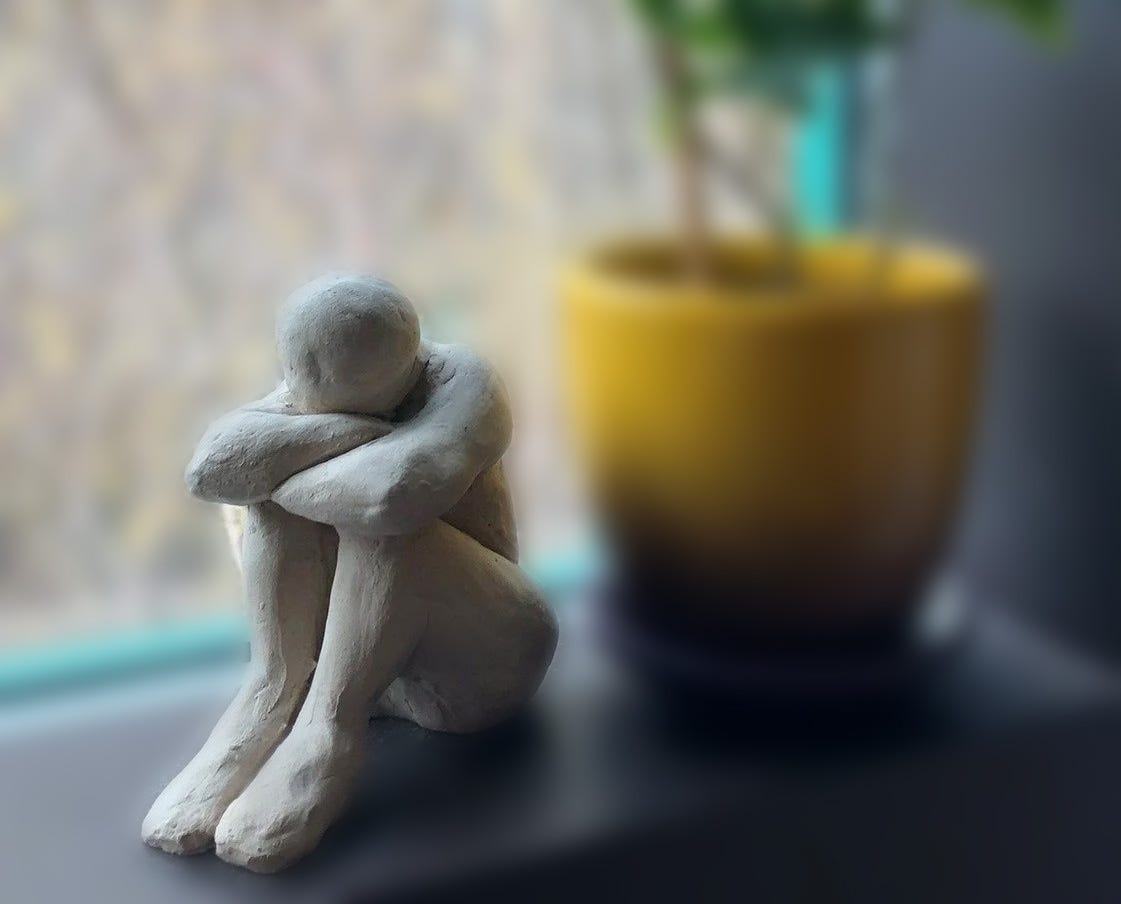
Step 4: Focus intently on your chosen object and imagine cutting it out from the background so that the object itself is the only element in focus.
Step 5: Start the timer and put your draw tool on the paper while looking only at the object.
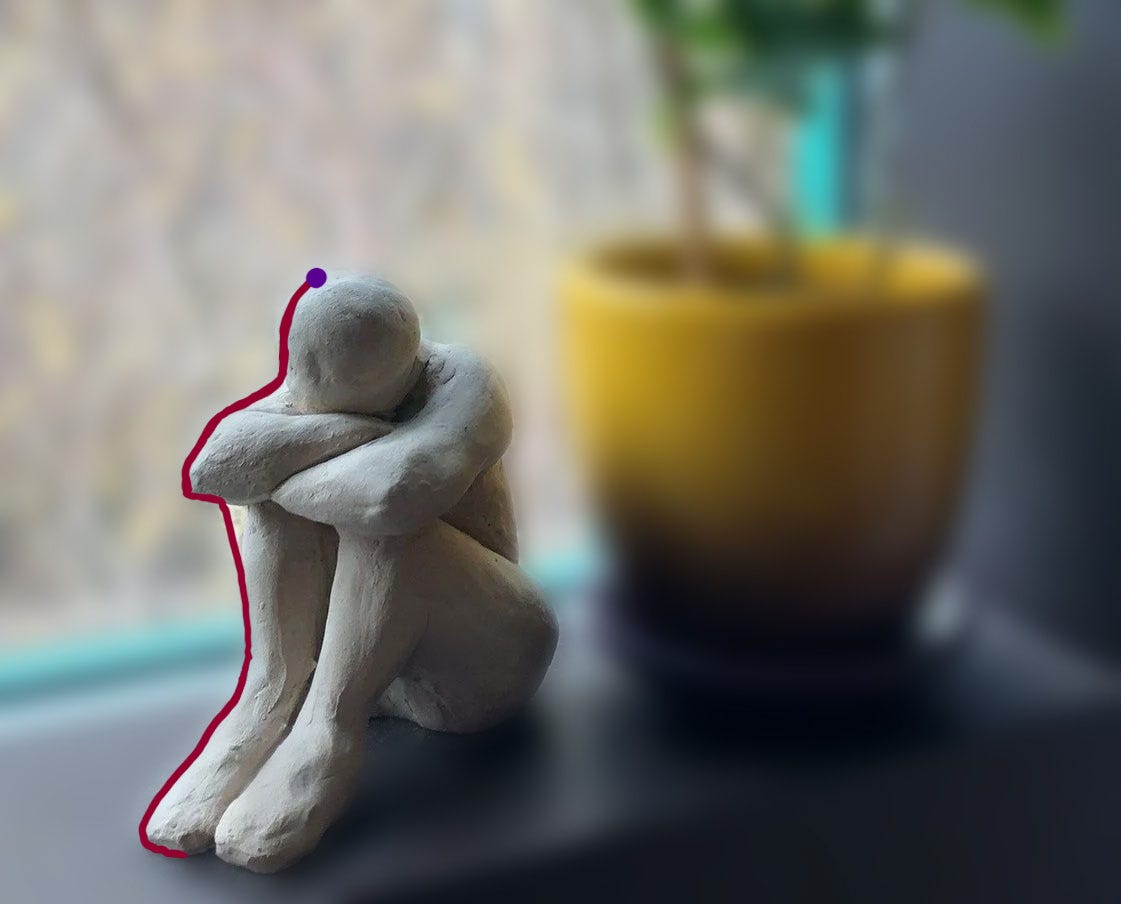
Step 6: For the entire two minutes on the timer, imagine that your eye is like a finger tracing around the edge (or contour) of that object and trace the shape around the object. Do not look at the paper and do not lift your drawing tool. Go slowwwwwly. Consider and capture every little bump and divot.
Step 7: Stop drawing when the timer is up. If you finish drawing before the timer is up, continue drawing around the shape until it’s done.
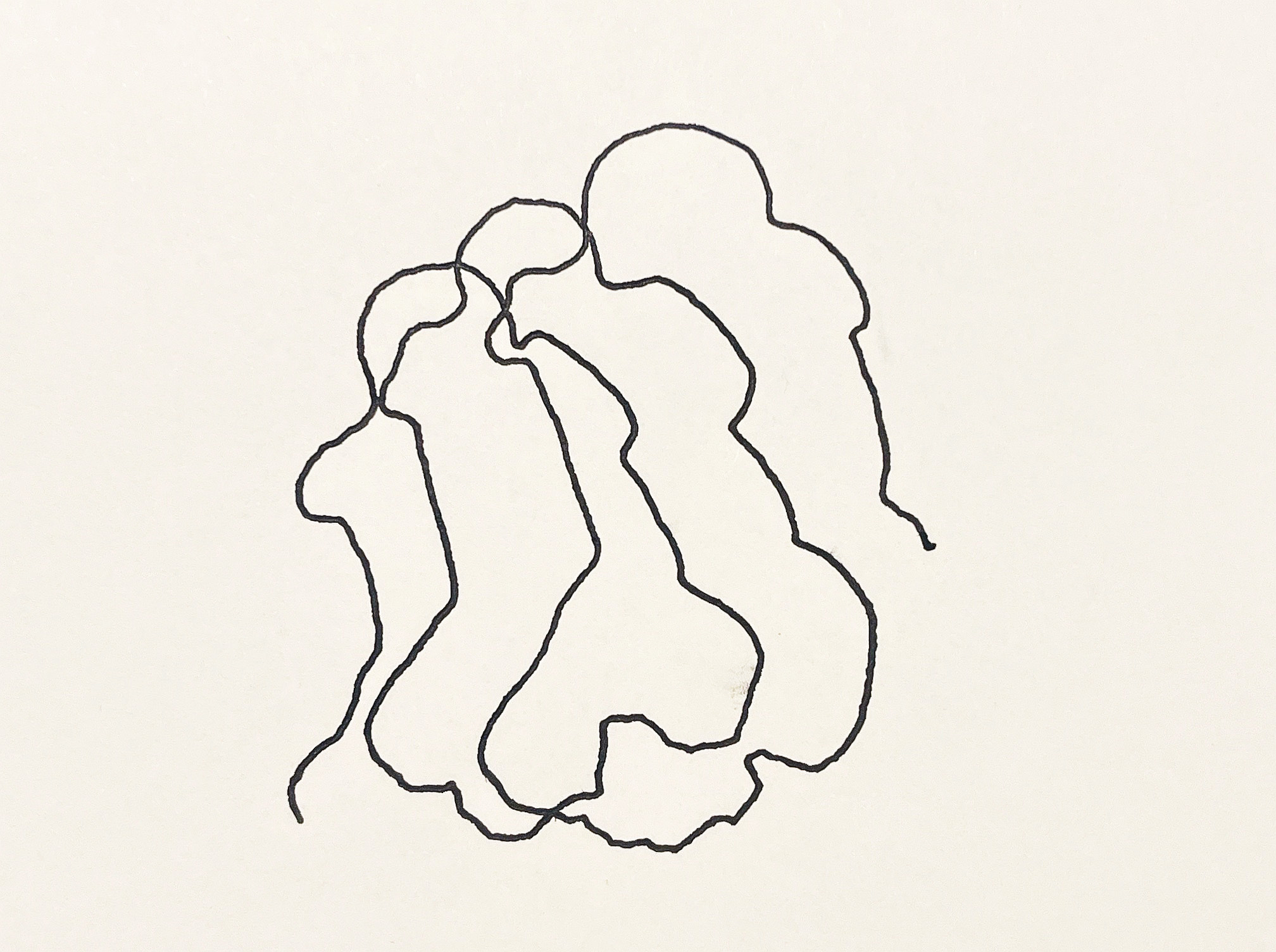
As you can see from my drawing, this is not about producing a drawing that looks exactly like the object. And yet, in considering its shape so intently, I’ve also managed to capture its surface contour in detail.
Checking shorthand assumptions against reality
As a person with a visible disability, I’ve had some negative interactions with the public over the years. Weird observations from strangers. Poor customer experiences in stores and restaurants. Frustrating accessibility issues that make me want to tear my hair out at times.
It would be easy to focus only on these negative instances because they stand out so starkly in my mind. Of course, I remember the demeaning comment made by someone I shared Burrard Skytrain Station elevator with years ago and could practically recite it verbatim at this point.
But if I were to only focus on that negative instance, it would be like glossing over all the positive or neutral interactions I had in that very same elevator.
Every time I pushed the button and the person next to me said nothing.
Every time I pushed the button and the person next to me said something innocuous about the weather.
Every time I held the door for someone as they rushed to the elevator and they thanked me.
Every time someone held the door for me as I rushed to the elevator and thanked them.
Every rare chance encounter where a genuine connection was made even for a moment
I commuted on Skytrain from Burnaby to downtown Vancouver virtually every weekday for a decade, going up and down that same Burrard Station elevator, probably hundreds of times.
If my commute was the path that I traced around the object, what notch represents that single negative instance? Or even the handful of negative instances I’ve had when commuting? What parts of the path represent all the other instances?
Sure, the negative experience matters, but not to the point that I’m going to say, “Every single time that I leave my apartment, I experience discrimination and abuse because of my disability,” because that simply isn’t true. That’s my mind focusing on the negative and extrapolating those experiences into something bigger.
If I take in the scope of my entire experience, just as I took in the entire shape of the object, I can perceive the good, the bad and the neutral in my situation much more clearly.
Last call for next Sunday’s CreativiTEA workshop
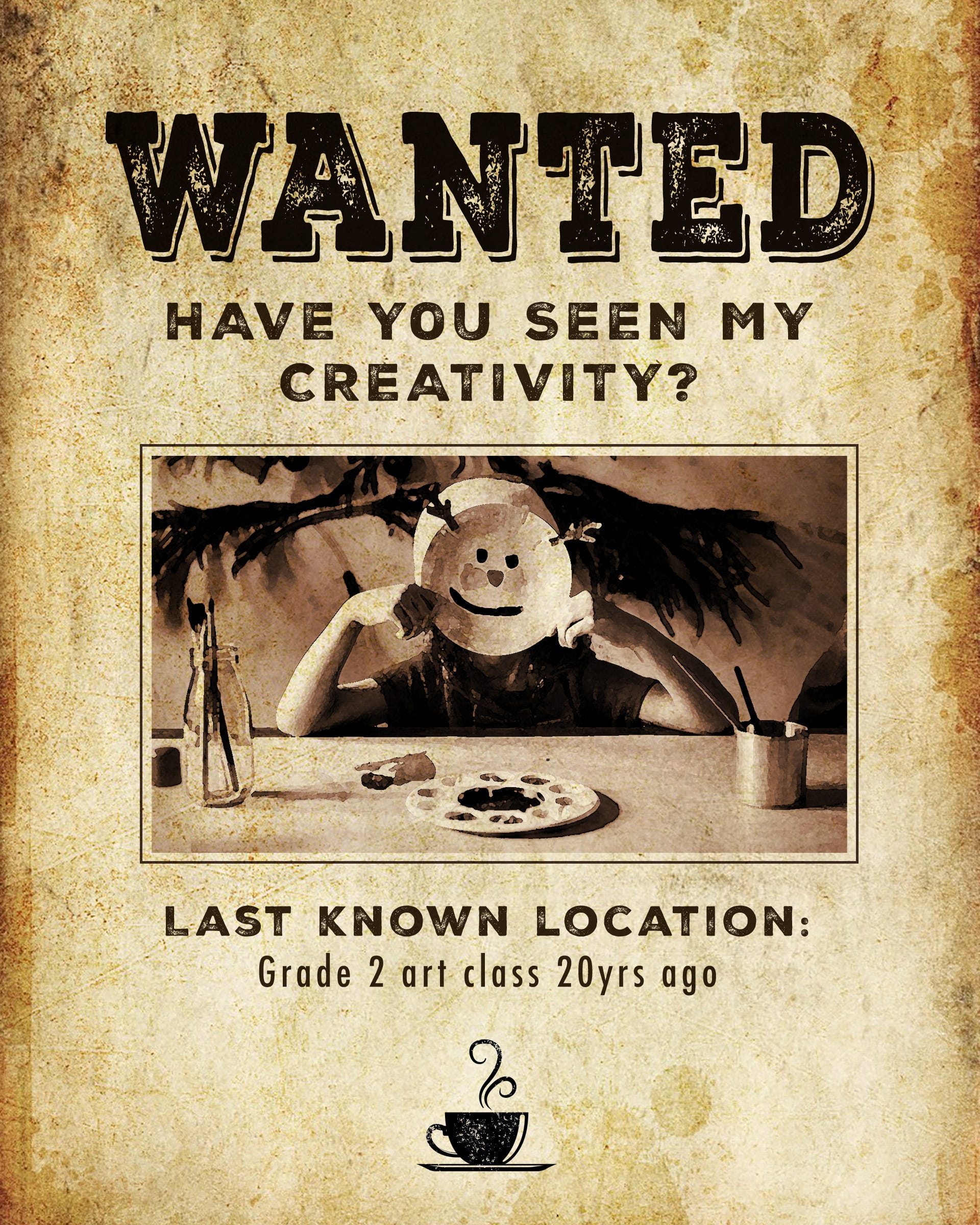
Is this you? Is this someone you know? If so, then come out to our next CreativiTEA for Grown-Ups workshop.
We understand that art-making and creativity hit differently when we become adults and folks need the right environment to recapture what made art so much fun when we were kids.
And if you haven't touched art supplies in forever or are worried about your perceived level of artistic talent—don't be! This is exactly the right place for you.
Inner and Outer Masks
Sunday, October 18th, from 1-3pm
Atelier Artista (4th floor)
cSPACE Marda Loop
1721 29 Avenue SW, Calgary
Tickets are $30 and include all art supplies, tea and delicious goodies.
Athena splits her time between being a fine art painter, writer and a creativity coach with Tilted Windmills.